C8 Oled Specs, Features, and Value: Is it worth the price tag?
The C8 OLED occupies an interesting place in the TV market: it is an OLED-based television that brought many of the format’s hallmark strengths — deep blacks, wide viewing angles, and excellent contrast — into a price band accessible to mainstream buyers. This article examines the C8 OLED in practical terms: what its core specifications and features mean for different types of users, how it performs in common real-world scenarios, what trade-offs to expect compared with newer and competing displays, and whether it represents good value for the typical buyer.
Introduction: who the C8 OLED is for
The C8 OLED is best suited to buyers who prioritize image quality for movies, streaming HDR content, and immersive TV viewing in dim-to-moderate lighting. It also appeals to gamers who value low input lag and responsive motion handling, though those who want the absolute latest HDMI-based features (native 4K/120Hz, advanced ALLM/VRR over HDMI 2.1) will find newer models better tailored to their needs. In short, the C8 targets households that want the visual benefits of OLED without paying for the newest flagship model.
Essential specifications and how they translate to real life
Below are the core specifications that define the C8 OLED experience and an explanation of what they mean for buyers in everyday use.
Panel technology — OLED
What it is: The C8 uses an organic light-emitting diode (OLED) panel, where each pixel emits its own light. There is no backlight layer.
Real-world effect: This design enables truly deep, absolute blacks because pixels can be turned off individually. For movie enthusiasts, that translates into dramatic contrast, excellent shadow detail and film-like picture depth. For shared living rooms, wide viewing angles mean people off-center still see uniform color and contrast.
Resolution — 4K (Ultra HD)
What it is: The C8 is a 4K TV (3840 x 2160 pixels).
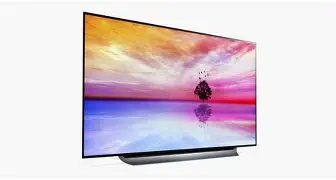
Real-world effect: 4K resolution offers a sharp picture for large screen sizes. This is particularly noticeable for modern streaming services and UHD Blu-rays. Users sitting at typical living-room distances will enjoy clear text for menus and crisp fine detail in nature documentaries and high-bandwidth film content.
High dynamic range (HDR) support
What it is: The C8 supports major HDR formats commonly used in streaming and disc media.
Real-world effect: When watching HDR-enabled movies or shows, the C8 can reproduce brighter highlights and richer colors than standard dynamic range sources. This enhances realism in scenes with explosions, sunlight, or specular highlights. HDR performance is still influenced by peak brightness; OLED panels deliver excellent local contrast but typically do not reach the extreme peak luminance of some high-end LED/LCD sets.
Smart TV platform
What it is: The C8 runs a smart platform with built-in streaming apps, voice support and regular UI navigation.
Real-world effect: Users get direct access to streaming services without a separate streaming stick or box. The platform is generally responsive for everyday viewing, app switching and content discovery, though power users who use external streaming or game devices may prefer to rely on those sources for the latest app ecosystems and update cadence.
Discover deals on TVs & Home Theater — updated daily.
See Deals →Inputs, gaming features, and connectivity
What it is: The C8 includes multiple HDMI inputs sufficient for connecting consoles, soundbars and media players. It offers gaming-friendly behavior such as low input lag and dedicated game modes.
Real-world effect: Casual and competitive gamers will appreciate the quick responsiveness and minimal lag, making the C8 suitable for console play and fast-action PC games. Buyers planning to use the very latest consoles at their maximum capabilities (e.g., native 4K at 120Hz over HDMI 2.1) should verify the exact port and format support for the specific C8 variant they consider.
Design and audio
What it is: The C8 has a slim profile and understated design typical of OLED TVs, with built-in speakers that are serviceable for dialogue and everyday TV audio.
Real-world effect: The television blends into modern living spaces and is easy to pair with a soundbar or AV receiver if a user wants a step-up in immersive audio. Built-in sound is fine for background viewing and smaller rooms, but a separate audio solution improves movie night and music listening.
Detailed product analysis
Breaking down the C8 in practical categories helps buyers understand how it will perform for intended use cases.
Picture quality for movies and streaming
The C8’s OLED panel excels with cinema-style content thanks to its ability to produce inky blacks and maintain detail in dark scenes. Film lovers will notice more texture in shadowed areas and better separation between dark and bright regions than comparable LED screens at the same price. Color reproduction is typically rich and accurate out of the box, and with basic calibration the picture becomes very close to reference levels for SDR and HDR content.
Sports and fast action
OLED panels like the C8 handle motion smoothly, offering good clarity for fast-moving subjects. While some LED LCDs with high peak brightness and motion-enhancing backlight techniques can produce a different kind of clarity in brightly lit stadium footage, the C8 provides consistent color and contrast at wide viewing angles, which is ideal for a living room with multiple viewers cheering on a game.
Gaming performance
Gamers benefit from the C8’s low input lag and responsive image processing, which reduces delay between controller input and on-screen action. These qualities make the C8 a solid choice for console and casual competitive play. The primary caveat is that ultra-high frame-rate modes or the absolute latest HDMI features depend on the specific port implementation; competitive gamers using top-tier PC graphics cards should check compatibility for advanced VRR and high refresh rates.
Brightness and HDR tone mapping
OLEDs deliver excellent contrast but generally lower sustained peak brightness than premium LED/LCD designs. For most dark-room viewing and HDR content, the C8’s HDR highlights appear striking and realistic. In very bright rooms with direct daylight, the perceived contrast will be reduced unless the room can be shaded or blinds used. Buyers who watch TV in very bright environments should weigh this trade-off when choosing any OLED.
Longevity and burn-in considerations
Burn-in — permanent retention of static images — is a known characteristic of self-emissive panels. Modern OLED designs and user-facing mitigations significantly reduce that risk for average viewers, but buyers who plan to run static content for prolonged, daily periods (e.g., a channel logo, news ticker, or public-display use) should consider alternatives or adopt recommended practices: varied content, moderate brightness, built-in pixel-shift features and screen savers.
Pros & Cons
- Pros
- Outstanding black levels and contrast from OLED panel technology
- Wide viewing angles with little color shift off-axis
- Excellent picture quality for movies and dark-room viewing
- Low input lag and responsive gaming performance for most players
- Slim, attractive industrial design that fits modern living spaces
- Cons
- Peak brightness is lower than some high-end LED/LCD TVs, which can affect HDR in very bright rooms
- Potential (though mitigated) risk of OLED burn-in with prolonged static content
- Older C8 hardware does not include newer HDMI 2.1 features found in later models
- Built-in speakers are functional but typically require a soundbar for a true home theater experience
Comparison table: C8 OLED vs. typical modern OLED vs. high-end LED/LCD
| Feature | C8 OLED (typical) | Typical modern OLED (newer generation) | High-end LED/LCD (QLED / Mini-LED) |
|---|---|---|---|
| Panel type | OLED | OLED (improved efficiency) | LED/LCD (local dimming / Mini-LED) |
| Contrast & blacks | Excellent, true black | Excellent, often improved processing | Very good with local dimming but not absolute black |
| Peak brightness (HDR) | Good for most HDR scenes | Higher than older models; better HDR highlights | Very high; excels in bright-room HDR |
| Viewing angles | Wide and stable | Wide and stable | Narrower; brightness/color shift off-center |
| Gaming readiness | Low input lag; strong for 60Hz content | Optimized for 120Hz, VRR, and newer console features | Strong; some models support 120Hz and HDMI 2.1 |
| Risk of burn-in | Low for typical use, possible with static images | Lower due to pixel management improvements | None (LCD-based) |
| Price (relative) | Competitive for OLED | Higher for the latest panels | Varies; can be competitive or premium for Mini-LED |
Buying guide: what to check before choosing a C8 OLED
Here are practical questions and checkpoints buyers should use to decide whether a C8 OLED is the right purchase for their needs.
Find top-rated TVs & Home Theater products at great prices.
Browse Now →1. What is the intended primary use?
If the primary use is cinematic movie watching in a dim room, the C8’s strengths line up perfectly: excellent blacks, cinematic contrast and color accuracy. If the main use is daytime TV in a very bright living room, evaluate sample units in a showroom or consider a high-brightness LED alternative.
2. How important is gaming and which console or PC will be used?
Casual gamers and most console owners will be happy with the C8’s responsiveness. Competitive gamers or those who plan to exploit the newest console features at 4K/120Hz should confirm whether the specific C8 variant supports the required HDMI modes and refresh rates; in many cases, newer models with HDMI 2.1 are a better fit for those use cases.
3. What size fits the room?
Pick a size that matches the room dimensions and viewing distance. For a living room, larger panels (55–77 inches) take advantage of 4K resolution and OLED contrast. For bedrooms or secondary rooms, smaller sizes are more practical and cost-effective.
4. Will the TV sit in a bright room or a room with wide windows?
Consider sample viewing in similar lighting conditions. If a lot of daylight will hit the screen, a brighter LED/LCD with strong anti-reflective coatings may be preferable; otherwise, the C8’s image fidelity in controlled lighting is outstanding.
5. What are the audio plans?
If the buyer wants immersive sound for films and music, plan a budget for a soundbar or AV system. The C8’s built-in audio is adequate for everyday use but is not a substitute for a dedicated surround or soundbar setup.
6. Check warranty and panel policies
Because OLED panels are an investment, buyers should check the manufacturer's warranty terms, especially regarding panel defects and image retention. Extended warranties that cover display faults may provide peace of mind for heavy users.
7. Look for calibration and picture presets
Good out-of-the-box presets can reduce the need for professional calibration. The C8 typically offers several picture modes; choosing the cinema or expert modes and adjusting basic settings (brightness, OLED light, color temperature) will usually yield the best results for film viewing.
Practical tips for ownership
- Enable pixel-shift and screen savers: Use built-in features that move pixels subtly to lower the risk of static image retention.
- Vary content: Don’t run static logos or HUD-heavy content for hours each day; alternate between shows, movies and varied channels.
- Use moderate brightness: Reduce maximum brightness settings when possible; excessively high settings accelerate panel wear and may amplify retention risk.
- Invest in a soundbar: A relatively modest soundbar can transform the viewing experience more cost-effectively than upgrading to a higher-end TV solely for audio reasons.
- Keep firmware updated: Manufacturers periodically release firmware that improves processing, fixes bugs and sometimes adds features.
Value assessment — is the price justified?
The C8 delivers many of the core advantages that make OLED desirable: superior black levels, high perceived contrast, and impressive off-axis performance. For buyers whose priorities are picture quality for film and streaming, the C8 represents strong value, especially when purchased at discount or as a previous-generation model. The primary value trade-offs are peak brightness compared with newer LED/LCDs and feature parity with the very latest gaming-focused TVs. If those trade-offs are acceptable — and for most mainstream viewers they are — the C8 can be considered a worthwhile investment in long-term picture quality.
Conclusion
The C8 OLED remains an attractive option for buyers who prioritize cinematic picture quality, deep blacks and wide viewing angles. It is especially compelling for movie enthusiasts and mixed-use households that enjoy both streaming and games but do not require the absolute newest HDMI features. Potential buyers should weigh room brightness, gaming needs, and audio plans when deciding. With sensible usage practices and basic calibration, the C8 offers many of the enduring strengths of OLED at a value point that will suit many viewers. Ultimately, whether the price tag is “worth it” depends on how much the buyer values picture fidelity and whether the specific trade-offs align with their viewing habits.